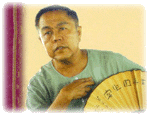
Our Founder: Sulak Sivaraksa
Honouring seventy years if living and working for
justice, peace, democracy and sustainable
livelihoods.
Sulak Sivaraksa, born 1933, is a prominent and
outspoken Thai intellectual and social critic. He is a teacher, a
scholar, a publisher, an activist, the founder of many
organisations, and the author of more than a hundred books and
monographs in both Thai and English.
Sulak's life and times
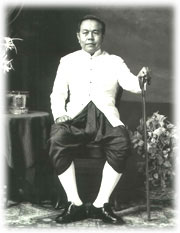 Educated in England and
Wales, Sulak returned to Siam
in 1961 at the age of 28 and founded Sangkhomsaat Paritat (Social
Science Review). This became Siam's foremost intellectual magazine,
dealing with numerous political and social issues during the time
of the military dictatorship. Sulak's work editing Sangkhomsaat
Paritat led him to become interested in grassroots issues. He
learned that to truly serve society, one must stay in touch with
the poor people. Beginning in the late 1960s he became involved in
a number of service-oriented, rural development projects, in
association with Buddhist monks and the student activist
community.
During the 1970s Sulak became the central figure in a number of
non-governmental organisations in Siam. These include the Komol
Keemthong Foundation (named for a young teacher killed in 1971),
the Pridi Banomyong Institute (named for the father of Thai
democracy), the Slum Childcare Foundation, the Co-ordinating Group
for Religion and Society, the Thai Inter-Religious Commission for
Development and Santi Pracha Dhamma Institute. Through his
involvement with these organisations, Sulak began to develop
indigenous, sustainable, and spiritual models for change. Since
then he has expanded his work to the regional and international
levels. He has co-founded the Asian Cultural Forum on Development
and the International Network of Engaged Buddhists.
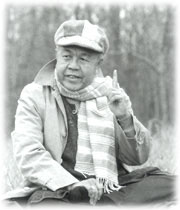 In 1976 Siam experienced its bloodiest coup.
Hundreds of students were killed and thousands were jailed. The
military burnt the whole stock of Sulak's bookshop and issued an
order for his arrest. Although Sulak was forced to remain in exile
for two years, he was able to continue his activist work in the
West. He lectured at the University of California Berkeley, Cornell
University, the University of Toronto, and throughout Europe.
In 1984 he was arrested in Bangkok on charges of criticising the
King, but international protest led to his eventual release. In
1991 another warrant was issued for his arrest and Sulak was forced
into political exile once more. He came back to fight the case in
the court in 1992 and won in 1995. At the end of that year he was
granted the Right Livelihood Award, also known as Alternative Nobel
Prize.
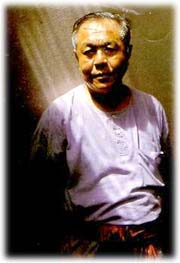 He sees Buddhism as a questioning process. Question
everything, including oneself, look deeply, and then act from that
insight. He is among a handful of leaders world-wide working to a
revive the socially engaged aspects of spirituality.
Whatever he does, however he does it, at the core of his work is
a mission to build a new leadership for change at all levels,
within Siam as well as outside it.
Much pioneer work has been accomplished, and the foundations for
meaningful social change have been laid. Now the challenge is
whether this spiritual, activist vision can be sustained and kept
growing as a stronger and more influential movement in the medium
and long-term. As our visionary leader grows older, more and more
responsibility falls on the younger leaders and NGO's he has so
carefully nurtured over the last thirty years.
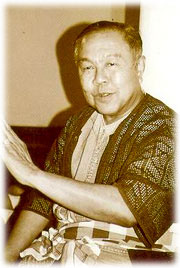 Sulak has given many who have contacted him, and
read his words, a unique perspective on how to work for peaceful,
sustainable social change using the principles and practices of
Buddhism as a personal and political resource. He has demonstrated
that the interior life of spiritual contemplation, and the exterior
life of political action, need not be considered opposites or
hostile to each other. On the contrary, he has shown that each may
be used to illuminate and inform and encourage the other, and
indeed that this is essential if either is to change for the
better. In his own words
We have more than enough programs,
organisations, parties, and strategies in the world for the
alleviation of suffering and injustice. In fact, we place too much
faith in the power of action, especially political action. Social
activism tends to preoccupy itself with the external. Like the
secular intellectuals, activists tend to see all malevolence as
being caused by "them" - the "system" - without understanding
how these negative factors also operate within ourselves. They
approach global problems with the mentality of social engineering,
assuming that personal virtue will result from a radical
restructuring of society.
The opposite view - that radical
transformation of society requires personal and spiritual change
first or at least simultaneously - has been accepted by
Buddhists and many other religious adherents for more than 2,500
years. Those who want to change society must understand the inner
dimensions of change. It is this sense of personal transformation
that religion can provide. Simply performing the outer rituals of
any tradition has little value if it is not accompanied by personal
transformation. Religious values are those that give voice to our
spiritual depth and humanity. There are many descriptions of the religious experience, but all come
back to becoming less and less selfish.
As this transformation is achieved, we
also acquire a greater moral responsibility. Spiritual
considerations and social change cannot be separated. Forces in our
social environment, such as consumerism, with its emphasis on
craving and dissatisfaction, can hinder our spiritual development.
People seeking to live spiritually must be concerned with their
social and physical environment. To be truly religious is not to
reject society but to work for social justice and change. Religion
is at the heart of social change, and social change is the essence
of religion.
Sulak Sivaraksa
Seeds of Peace

Read more of Sulak CV (Sulak CV)
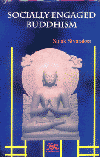 Newest book of Sulak
Socially Engaged Buddhism 
Frist published : 2005 (Printed in India) Respectfully dedicated to His Holiness the Dalai Lama on his seventieth birthday anniversary 6 th July 2005 and Daw Aung San Suu Kyi on her sixtieth birth anniversary 19 th June 2005.
Two leading Buddhists who stand prominently democracy, social justice and peace.
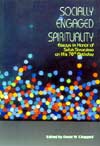 Socially Engaged Spirituality
Essays in Honor of Sulak Siavaraksa on His 70th Birthday
Edited by David W. Chappell
Read some article from this book.
For further details about our founder Sulak Sivaraksa:
-
There is an extensive archive of Sulak's speeches, some of which are available
for download here: Sulaks's speeches.
-
A list of Sulak's books can be seen here: Sulak's
Literature.
-
Visit www.semsikkha.org which has a more extensive biography in Thai language.
-
SULAK SIVARAKSA' s SCHEDULE (see his passed schedule)
2005
D
/ M / Y |
Details |
10-13 August 2005 |
International Symposium, Multi-Faith Center, Brisbane, Australia
|
| Saturday 3 - Sunday 4 September 2005 |
To bring about change, Buddhism and the personal or societal changes of our era Second Summer University of Buddhism at Brussels
|
| 7-9 Sept. 2005 |
Helsinki Conference, Helsinki, Finland
|
| 26 Set. - 7 October 2005 |
Gandhi Lectures, Mcmaster University, Toronto Canada
|
| 11-23 Oct. 2005 |
INEB Conference, India
|
| 24-27 Oct. 2005 |
Course of Science, Spirituality and Social Movement,
BIJA VIDYAPEETH
,India
|
| 11-13 November 2005 |
Honolulu, Hawaii, USA
|
| 2-20 December 2005 |
Bangalore, India
|
For more details, please contact
:
Mr. Phairote
666 Charoen Nakorn Road, Klong San, Bangkok 10600 Siam (Thailand)
Tel 662-438 -9332 email : [email protected]
| 


