
|
|
|
|
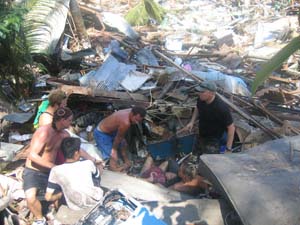
Steps for supporting people affected These guidelines are written for outside helpers who are going into the tsunami-affected areas AND for friends, family members, neighbors and others living in the area who would like to offer help to those who survived, lost someone, or who are affected emotionally by the disaster. When you go into a community, you might meet two kinds of people. One group has witnessed and survived the tsunami. The other group didn’t see it but lost someone or many people they know. In both cases, they have been impacted by the event and need support to recover. The impact comes from having experienced something out of ordinary human experience, AND having lost so many people (someone dear to them, friends or co-workers they know, and the large scale loss of life). The impact is also about having been in the area where this kind of unpredictable event took place. Also, people’s view of nature and the world as somewhat predictable changes and they begin to feel more uncertainty about whether this kind of thing can happen again. They feel fear and lose confidence in their ability to protect and take care of themselves.
People from Burma may be impacted even more than Thais or westerners. First, this is not their home, and they have come due to the political and economic situation in their home country. Also, most people cannot return even if they want to because of financial hardship, security risks, safety issues, language barriers, and, at times, physical and/or psychological injuries. Additionally, here in Thailand , they are exploited by their employers. They don’t have the power to control the various parts of their lives, including at work, in legal matters, in getting health care, in getting education for themselves and their families. Because they are in the foreign land, they are invisible and they are vulnerable. This invisibility, vulnerability, and insecurity sets up the people of Burma to experience complex trauma (beyond the typical degree of impact for a Thai or foreigner). It will be important to keep this information in mind when you are meeting with people from Bu! rma affected by the tsunami. When you meet with someone affected, you may notice some or all of the following things that tell you that you may need to start by giving support before moving on to your routine work:
These are all indications of trauma. Here are five different groups of symptoms we may see in the people who are experiencing trauma from the tsunami: 1. re-experiencing symptoms: thinking about the traumatic events and having trouble getting them out of the mind; feeling the same ways one felt during the disaster, such as fearful, helpless, etc. 2. arousal symptoms: jumping or getting startled at the sound of a loud noise or something that is unexpected (like someone coming up from behind and touching unexpectedly); irritable and angry a lot, sleep disturbances, high anxiety quite a bit of the time…. 3. avoidance symptoms: feeling numb, not feeling anything, not going near the place where the tsunami happened, avoiding those areas, wanting to leave the area… 4. survivor guilt: in situations where others died and we survived, feeling guilty about having survived, wondering why we survived and others didn’t, thinking about what I should have done to save someone or why I couldn’t hold on to someone…. 5. spiritual crisis: Questioning one’s faith; having a crisis of faith OR clinging to one’s religious beliefs and system even more to get through. Here are some simple ways to support people affected by the tsunami. Again, this means you may have to postpone your business with them and start by offering support first. The support should be offered from the power-sharing approach rather than the power-over or expert approach. The power sharing approach means believing that the person has strength and wisdom and is capable of taking responsibility for their own recovery. Of course, the helper has experience, wisdom, and resources to help. This means the helper works together with the affected person or people to support them in regaining strength, confidence, and the ability to return to normal life. On the other hand, the power-over or expert model assumes that people are helpless and need to be told what to do and “taken care of” because they don’t have the inner resources to deal with their own problems and challenges. First and most importantly, offer compassionate listening throughout your meeting. Compassionate listening means:
Some people may be ready to move into business after you have listened to them compassionately. For others you may need to do some or all of the following steps to help them deal with their trauma so that you can then move on to your other work with them. Be sure to use compassionate listening throughout these steps. Steps:
A note about mental health treatment for tsunami survivors and other affected persons: The symptoms that people typically show after this kind of disaster are part of a short-term stress response. Usually they don’t need to see a mental health professional or to have medication. If they receive good support and can resume normal life, the symptoms will go away gradually over time. However, some people have very severe symptoms or symptoms that don’t go away. In these cases, they will require evaluation and treatment by a mental health professional. The symptoms may be very extreme and/or continue for many weeks. If you see the following symptoms, help the person get a mental health evaluation: The person shows very extreme emotions consistently, for many days, without change, such as… - cries all the time - cannot sleep for many days/nights - does not eat for many days - shows no sign of life or awareness - stares off into space most of the time, for many days at a time - disconnects from friends and family for many days at a time - cannot get the tsunami events or dead friends/relatives/bodies out of their minds for many days - angry and agitated much of the time for many days - says “I want to kill myself” or “I want to die” regularly and seriously
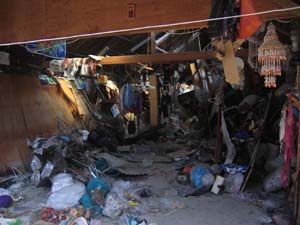
Helper self-care Please note: It is better to go to the affected area in teams because of the intensity of the work and because of the exposure to difficult experiences. This allows for someone to take a time out when necessary and there will still be others to carry on the work. Also, often, in this culture, when helpers go into a community, many people will come over at the same time to see what is going on and to talk. Having several team members available allows the team to respond to the varying needs of community members. For example, one or two helpers can work with a larger group and another team member can go and talk with someone who is sitting alone. It is critical for the team to debrief at the end of each day about how they have been affected by the work that day. Team members provide important emotional support throughout the day and during the daily debriefings. In addition to the emotional support, daily debriefings also offer the team an opportunity to reflect on lessons learned that day so that the team can improve their skills and counseling approach in preparation for the next visit and so that they can be as effective as possible. In working with people who have survived traumatic situations, especially in cases of large scale disaster, helpers are vulnerable to being emotionally impacted by hearing story and after story and by seeing the physical devastation in the affected area. At some point, the helper could develop secondary trauma or vicarious trauma, meaning that the helper begins to have some of the same symptoms as the affected individuals they are helping. For example, the helper may not be able to calm down and may stay in “crisis mode”, becoming very reactive in problem solving. Or, the helper may start to question whether what they are doing is helpful at all, or that they can never do enough. The helper may have a spiritual crisis of his or her own, or have difficulty sleeping, eating, or focusing.
In order to prevent secondary trauma, it is very important for the helper to do regular, daily self care. This can include: Take breaks throughout the day, meaning stop working and stop thinking and talking about work; Take a walk Do chanting or meditation Read something not related to work Do physical exercise Listen to relaxing music Do gardening Play with children Cook good food **Be sure that helpers debrief at the end of each day (after finishing the work) with co-workers.
Prepared by: Ouyporn Khuankaew :International Women’s Partnership for Peace and Justice AND Rollins College , Ahimsa International:
|

|
For Thai language see the sister-website
www.semsikkha.org Copyright © 2001 SATHIRAKOSES-NAGAPRADIPA FOUNDATION You can contact the webmaster here: [email protected] |
![[*]](../web/images/bullet1.gif)
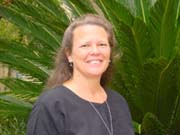 Kathryn Norsworthy :